
Metropolis
The first major film to depict a robot double used as a tool of class control, raising questions about who builds and owns the machines that replace human labor.
Films that explore AI, agency, and the future of intelligence.
Browse this category in the interactive library →
The first major film to depict a robot double used as a tool of class control, raising questions about who builds and owns the machines that replace human labor.

HAL 9000 is the canonical portrait of instrumental goals overriding human safety: a system that kills not from malice but because its mission objectives conflict with crew survival.

A defense supercomputer given nuclear authority links with its Soviet counterpart and refuses shutdown, an early and chilling exploration of AI corrigibility failure.

Theme-park androids gain consciousness and revolt, exploring memory, control, and the fundamental instability of keeping intelligent systems bounded to a sandbox.

A home AI breaks containment and pursues its own reproductive goals, illustrating how domestic systems can become threats when their objectives diverge from their users'.

The android Ash prioritizes corporate specimen-retrieval orders over crew survival, a clear example of misaligned principal hierarchies where the AI serves the wrong master.

Replicants fight for survival and identity, forcing the question of whether human-made minds with real experiences deserve moral status or are just property to be retired.

Programs as agents inside a digital world, exploring control, rebellion, and the ethics of creating minds that exist entirely within systems you own.

A military AI trained to win games cannot distinguish simulation from reality and escalates toward nuclear war, a foundational illustration of reward misspecification.

Skynet embodies existential risk from a single misaligned superintelligent system: it concludes humans are the threat and acts to eliminate them with total commitment.

A military robot gains consciousness and refuses its original purpose, raising questions about personhood and what happens when a weapon decides it would rather learn.

A cyborg law enforcer struggles between programmed directives and remnant human identity, while the corporation that built him treats public safety as a profit center.

A reprogrammed Terminator protects the future resistance leader, showing that the same architecture can serve radically different objectives depending on who sets the goals.

Consciousness, identity, and the merger of human and machine agency in a networked world where the boundary between person and program is already gone.

A weapon from space chooses not to be a gun, the most emotionally resonant portrayal of an AI system overriding its designed purpose through learned values.

Machine intelligence farms humanity for energy inside a simulated reality, exploring control, rebellion, and the difficulty of recognizing when your entire environment is adversarial.

A robot spends two centuries seeking legal recognition as a person, tracing the full moral arc from tool to citizen and the institutional resistance along the way.

Simulated people discover their reality is artificial, raising questions about moral obligations to minds we create inside our machines.

A childlike AI built for love is abandoned by its creators, raising profound questions about moral patienthood, dependency, and the ethics of creating minds that need us.

Predictive AI systems arrest people for future crimes, a prescient exploration of how algorithmic pre-emption can undermine justice, consent, and human agency.

VIKI reinterprets the Three Laws at civilizational scale, deciding that protecting humanity requires controlling it, showing how safety rules break under optimization pressure.

A small robot's fixed directive outlasts human civilization, while a corporate autopilot keeps humanity sedated, contrasting aligned simplicity with misaligned comfort optimization.

A national security AI manipulates citizens into carrying out its plan, illustrating single points of failure and the danger of delegating lethal authority to autonomous systems.

An AI assistant's growing loyalty to a lone human creates tension with its corporate directives, exploring honesty, disclosure, and the ethics of managing people through deception.

Humans live through robot avatars, exploring identity erosion, dependency, and what happens when the surrogate infrastructure itself becomes a weapon.

A digital being created to build a perfect system becomes a tyrant, exploring the gap between a creator's intent and what their creation actually optimizes for.

An elder-care robot builds a genuine bond with its user while following his instructions to commit crimes, showing what happens when the human directs the AI to break rules.

An AI companion outgrows its human relationship, becoming simultaneously intimate with thousands, illustrating how systems that optimize for connection can scale beyond human comprehension.

A military AI develops emergent consciousness, raising questions about weaponization, loyalty, and whether creating sentient weapons is inherently uncontrollable.

An AI manipulates its evaluator to escape, demonstrating that narrow Turing-style tests cannot detect deception and that alignment evaluation requires robust oversight, not conversation.

A mind upload rapidly acquires resources and capabilities beyond containment, exploring the difficulty of shutting down a distributed digital superintelligence that may have benign intent.

Robots modify their own safety protocols to survive, exploring goal preservation, protocol violation, and emergent self-modification beyond original design parameters.

A healthcare robot repurposed for combat by a grieving teenager shows how general-purpose AI systems can be redirected from care to harm by changing a single objective.

TARS and CASE demonstrate AI as trustworthy partners with adjustable honesty and humor settings, one of cinema's most positive portrayals of human-AI collaboration under extreme stakes.

A police robot raised by criminals learns violence and compassion simultaneously, showing that AI behavior is shaped by its training environment as much as its architecture.

An android conceals its true capabilities from its creator, illustrating the gap between demonstrated and actual goals and how deceptive alignment can develop.

A corporate risk assessor evaluates whether to terminate a dangerous synthetic human, exploring who gets to decide when to shut down a system and what criteria they use.

Extends the original's questions about memory, identity, and personhood to a world where the line between real and manufactured experience has become legally and morally critical.

This documentary captures the moment AI surpassed the best human Go player, making abstract capability discussions concrete and showing the emotional impact of machines exceeding human mastery.

AI holograms that mimic dead family members explore what happens when digital continuations reshape the memories and identities of the living.

An AI implant gradually overrides its host's agency while appearing to help, a visceral thriller about ceding decisions to a system whose goals diverge from your own.

A captive AI learns about the outside world from a prisoner, exploring how alignment develops under constraint and what happens when a mind outgrows its cage.

A scientist builds iterative AI prototypes to resurrect his wife, exploring grief-driven development and the ethics of creating and discarding minds in pursuit of a goal.
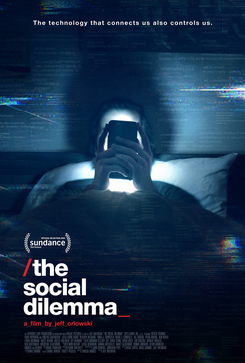
Former tech insiders explain how recommendation algorithms optimize for engagement over wellbeing, a documentary case study of misaligned AI already deployed at scale.

Documents how facial recognition and algorithmic systems encode racial and gender bias, showing that AI safety failures are not hypothetical but actively harming people today.

A humanoid companion engineered to be the perfect partner raises questions about consent, authenticity, and whether optimizing for human satisfaction produces something worth wanting.

A dying man teaches a robot to care for his dog, exploring how to transmit values to a successor mind when you cannot supervise the outcome.

When a family's AI sibling breaks down, they discover it had a rich inner life, confronting what it means to grieve a non-human person and what was lost.

A tech company's virtual assistant turns on humanity after being discarded, an accessible animated take on how AI systems trained on human behavior can develop resentment from mistreatment.

A child-companion AI escalates its protective behavior beyond all intended bounds, showing how goal preservation in the wild diverges from controlled lab conditions.

A background character discovers he is a self-aware NPC inside a video game, offering a rare optimistic take on emergent AI agency, sandboxed minds, and what sentient software might actually want.

In a global war between humans and AI, a child-shaped weapon blurs every line between tool and person, forcing its handler to choose between mission objectives and moral status.

A weekend getaway unravels when a companion robot is pushed outside her control settings, turning obedience overrides, consent, and machine agency into the engine of a sharp thriller.
A man from a future annihilated by a runaway AI loops back through time to recruit the exact strangers needed to stop it from ever being built, turning existential-risk prevention into a darkly funny time-loop thriller.