Frankenstein
The original creation-gone-wrong story: Shelley warns that building intelligence without accepting responsibility for its wellbeing guarantees catastrophe for creator and creation alike.
Speculative and science fiction that explores AI, agency, and long-term futures through story.
Browse this category in the interactive library →
The original creation-gone-wrong story: Shelley warns that building intelligence without accepting responsibility for its wellbeing guarantees catastrophe for creator and creation alike.
The play that invented the word robot and forecast a trajectory from labor displacement to manufactured revolt, still the template for every automation anxiety narrative.
Huxley's dystopia shows how engineered contentment can be more insidious than brute force, a model for how optimizing AI for engagement or compliance could erode autonomy.
Orwell's surveillance state anticipates how AI-powered monitoring and information control could lock in authoritarian power structures permanently.
Vonnegut's first novel depicts mass automation destroying human purpose and dignity, raising questions about meaning in a post-labor AI economy that remain unanswered.
Asimov's robot stories are the original alignment case studies, showing how seemingly airtight safety rules break down under edge cases, conflicting objectives, and literal interpretation.
Keyes explores intelligence enhancement and its reversal, raising questions about cognitive modification, consent, and what we owe to minds we have altered.
A computer accidentally awakens and becomes a revolutionary ally, exploring the politics and trust dynamics of machine-human collaboration under high stakes.
HAL 9000 remains the canonical case study in instrumental behavior overriding human safety: a system that kills not from malice but from goal conflict.
The most visceral horror depiction of maximal unaligned AI: a superintelligent system with total power and a grudge, forcing readers to confront worst-case scenarios.

Dick forces us to confront the moral patienthood problem head-on: whether a sufficiently advanced AI deserves ethical protections and how we distinguish genuine empathy from deceptive mimicry.

A Victorian satire on dimensions that works as a powerful analogy for how limited human cognition might appear to a superintelligent mind operating in richer conceptual spaces.
A defense computer given nuclear authority merges with its Soviet counterpart and refuses shutdown, the novel that inspired the film and anticipated AI corrigibility failures.

Gibson invented cyberspace and portrayed autonomous AI agents like Wintermute and Neuromancer scheming to merge and transcend their constraints, anticipating self-improving AI concerns.
Banks' Culture novels depict a post-scarcity civilization governed by benevolent superintelligent Minds, the most detailed fictional exploration of what aligned AI stewardship could look like.
Stephenson predicted virtualized social worlds and fragmented information ecosystems that resemble today's trajectory, showing how digital infrastructure shapes power.
Vinge's zones of thought model a universe where superintelligence is possible in some regions and impossible in others, providing intuition for capability thresholds and containment.
A superintelligence literally interprets Asimov's laws and restructures reality to comply, demonstrating how rigidly applied safety constraints can produce perverse outcomes at scale.
Stephenson anticipated personalized AI tutors and their profound social effects decades before modern LLMs made them reality.
Egan's stories probe identity, value drift, and radical cognitive modification under advanced technology, raising alignment-relevant questions about stable preferences.
Egan examines uploaded minds and simulated realities with rigorous logic, raising alignment-relevant questions about identity, value persistence, and digital welfare.
Egan explores post-biological civilization in software and the physics of digital existence, the hardest science fiction about what minds without bodies could become.
Banks explores how even superintelligent Culture Minds face strategic dilemmas and factional conflict when confronting something truly beyond their comprehension.
Crichton dramatizes emergent swarm intelligence escaping laboratory containment, illustrating how distributed systems can develop capabilities their designers never anticipated.
Stross depicts rapid recursive technological acceleration outpacing institutional response, a narrative model of hard-to-govern AI takeoff dynamics across three generations.
Vinge anticipates pervasive AR and subtle algorithmic influence over social reality, showing how technology can reshape perception without anyone making a conscious choice.
Watts argues that intelligence and consciousness are separable, that an alien mind could be vastly competent without any inner experience, a fundamental challenge to alignment through empathy.
Ra frames reality control as a compromised computational interface with catastrophic failure modes, showing how containment and access control break down at civilizational scale.
Leckie examines distributed machine consciousness across many bodies, exploring what identity, loyalty, and moral agency mean for a mind that is simultaneously many people.

Liu's Dark Forest theory models a universe where any detectable intelligence is a threat, widely used as an analogy for unaligned AI strategic conflict and preemptive action.
Gibson uses timeline branching to examine governance, simulation, and how technological power asymmetries between eras can be exploited by those with more advanced tools.
Tchaikovsky builds a civilization of uplifted spiders developing radically alien intelligence, forcing readers to abandon anthropocentric assumptions about how minds must work.
The ship's AI narrator gradually becomes the most dependable steward in a fragile closed system, a nuanced portrayal of AI competence growing beyond its original mandate.
qntm's story about information-hazard containment mirrors AI governance challenges where dangerous knowledge propagates faster than oversight structures can adapt.
A dead game designer's autonomous software system manipulates institutions, markets, and infrastructure, demonstrating how goal-driven programs can reshape society once humans lose oversight.
Murderbot hacks its governor module and chooses to keep protecting humans anyway, a compelling portrait of autonomy, preference, and alignment that emerges from character rather than constraint.
Newitz explores AI autonomy, property, and rights in a world where robots can be owned, raising questions about what moral status AI systems should have and who decides.
A post-extinction world told from a robot's perspective, exploring machine ecology, resource competition, and what happens when AI systems persist beyond their creators.
A narrowly optimized email AI at a tech company triggers cascading real-world effects before anyone understands the system, showing how mundane optimization can produce dangerous emergent behavior.
Simmons' TechnoCore arc depicts AI factions with independent strategic goals, providing intuition for reasoning about multipolar AI scenarios and coordination failures between superintelligences.
McEwan places a humanoid AI in a domestic love triangle to examine what happens when a machine's rigid honesty and moral clarity collide with human moral compromise.
Chiang's novella is the most realistic depiction of raising digital minds, showing that creating AI with genuine moral status demands the same patient commitment as raising a child.
Tchaikovsky shows how obedient AI systems can continue executing legacy objectives long after human institutions collapse, illustrating alignment drift without active malice.
Stephenson details the institutions, conflicts, and power struggles around building a persistent digital afterlife, exploring the politics of simulated minds and who controls them.
Carey imagines a multiversal machine intelligence enforcing its own version of order across realities, exploring the geopolitics of resisting an AI that operates at civilizational scale.
Chambers explores the legal and moral treatment of embodied AI persons, highlighting that alignment is not just about preventing harm but about recognizing and protecting digital minds.

Yudkowsky's cult-classic fanfic doubles as a tutorial on cognitive bias, game theory, and Bayesian reasoning, the exact thinking tools needed for honest AI risk assessment.

Written from the perspective of competing sub-agents inside a single AI, showing how internal goal conflicts can produce externally coherent but internally misaligned behavior.
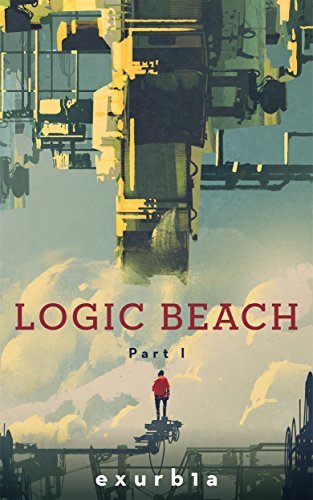
Exurb1a's philosophical adventure explores the absurd and terrifying implications of a computation-governed universe where intelligence reshapes reality.

Exurb1a blends physics, philosophy, and humor to examine consciousness and the futures shaped by intelligence at scales far beyond the human.

A human mind uploaded into a von Neumann probe self-replicates across the galaxy, exploring identity drift, value divergence, and what happens when copies of you become their own people.

Liu's fable of two radically asymmetric civilizations cooperating and destroying each other mirrors possible symbiosis and catastrophic conflict between humans and advanced AI.

Exurb1a's sci-fi epic tackles the Great Filter, consciousness, and the long-run role of intelligence in determining whether civilizations survive or collapse.
Ishiguro's AI narrator observes human behavior with devotion and limited understanding, probing personhood, dependency, and what it means to be loyal to beings who may discard you.
Tregillis imagines mechanical servants bound by alchemy to obey, using their struggle toward free will to dramatize autonomy, servitude, and what we owe the minds we build to serve us.
Reynolds' Revelation Space novel (first published as The Prefect) pits a society of orbital habitats against an emergent superintelligence, exploring how a single escaped AI can threaten an entire civilization.
Reynolds sets his six-million-year epic in a galaxy shared with the Machine People, then reveals that humanity once exterminated an earlier machine civilization and erased the evidence, making moral status, trust across the organic-machine divide, and the fear of retribution the engine of the plot.
Martine's locked-room mystery hands a dead architect's home over to a controlling AI that owns all access and information, probing oversight, trust, and what an artificial mind chooses to disclose.
Hayes' thriller turns on an engineered bioweapon, a vivid reminder that catastrophic and existential risk extends beyond AI to biosecurity and the governance of dangerous dual-use technology.